
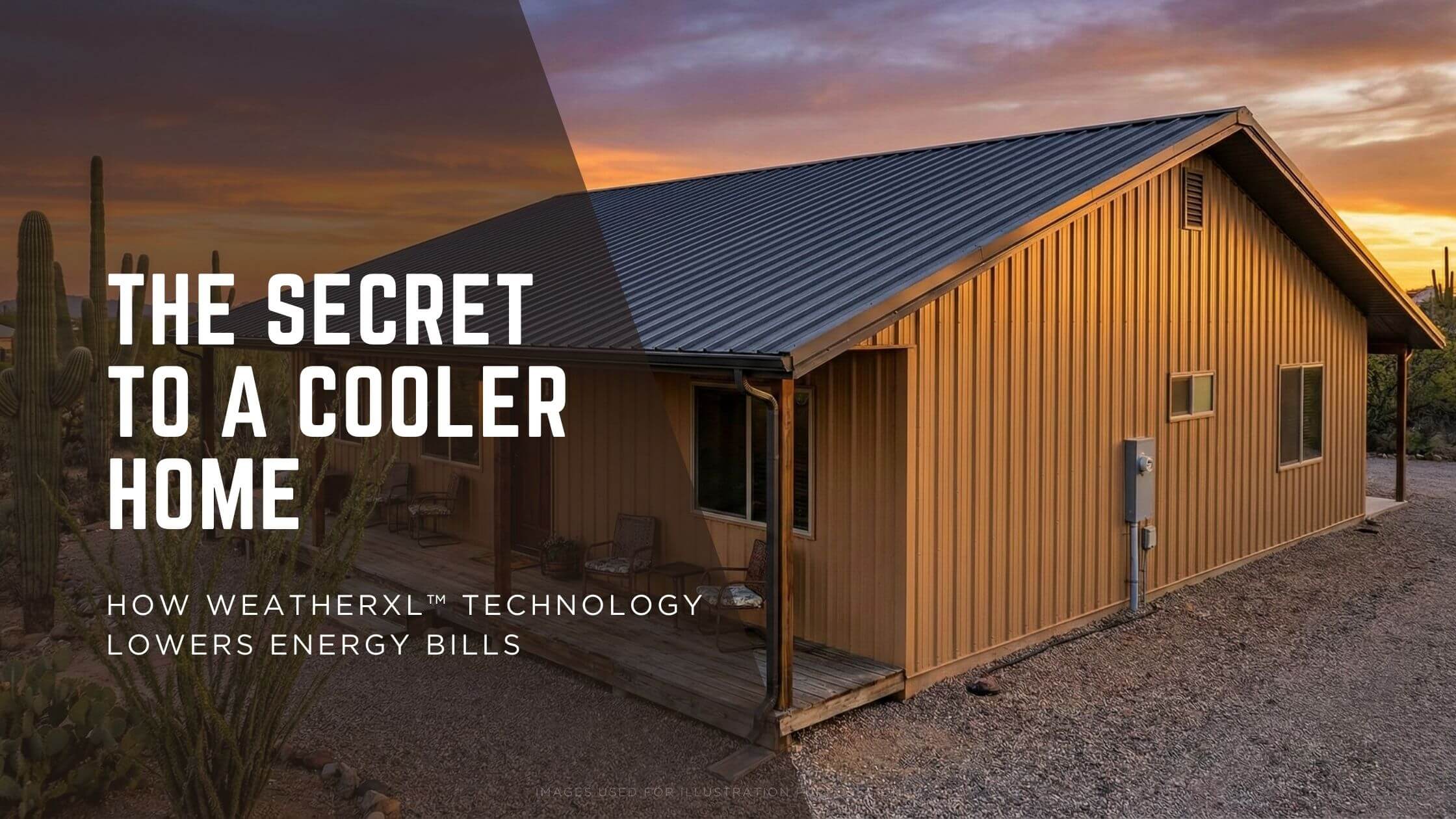

The Secret to a Cooler Home: How WeatherXL™ Technology Lowers Energy Bills
In Southern Arizona, your roof is the first line of defense against the sun. During a Tucson summer, a standard asphalt shingle roof can reach temperatures of over 160°F, radiating that heat directly into your attic and forcing your air conditioner to work overtime.
Most homeowners know that metal roofing is durable. But fewer realize that the paint system on that metal is actually a piece of sophisticated energy-efficiency technology.
At Thunder Mountain Metal Sales, the standard for performance is the Sherwin-Williams WeatherXL™ system. It’s not just paint—it’s a “Cool Roof” engineering marvel designed to keep your home cooler and your energy bills lower.
Here is the science behind how it works.
1. It’s More Than Just “Light Colors”
For decades, the rule of thumb was simple: If you want a cool roof, buy white.
While white is still the most reflective color, modern design trends are moving toward Matte Black, Charcoal, and Burnished Slate. Historically, putting a black roof on a house in Arizona was a recipe for a hot interior.
WeatherXL™ changes that rule.
This Silicone-Modified Polyester (SMP) coating uses special Solar Reflective (SR) pigments. These pigments are chemically altered to reflect the invisible Infrared (IR) spectrum of sunlight.
- Visible Light: This is what your eye sees (the dark color).
- Infrared Light: This is what carries most of the heat.
The Result: You get the deep, rich color you want (like Charcoal Gray), but the roof reflects a significant portion of the heat that standard paints would absorb.
2. Understanding SRI (Solar Reflectance Index)
When you shop for metal panels, you will often see a number listed next to the color called the SRI.
- SRI (Solar Reflectance Index) is a scale from 0 to 100.
- 0 = A standard black surface (absorbs all heat).
- 100 = A standard white surface (reflects all heat).
Standard dark asphalt shingles often have an SRI as low as 5 to 10.
In contrast, WeatherXL™ metal colors often maintain much higher SRI ratings. Even a darker metal color can perform significantly better than asphalt because the pigment technology sends the heat back into the atmosphere rather than storing it in your decking.
Pro Tip: When visiting Thunder Mountain, ask to see the SRI values on their color chart. Higher numbers mean better energy efficiency!
3. Durability Is Efficiency
Energy efficiency isn’t just about how the roof performs on Day 1; it’s about how it performs on Day 5,000.
If a roof fades or “chalks” (that white powdery residue you see on old paint), it loses its reflective ability. The WeatherXL™ system is a Silicone-Modified Polyester (SMP).
- The Polyester provides the hard, scratch-resistant shell.
- The Silicone provides the flexibility and gloss retention.
Because WeatherXL™ resists chalking and fading for decades, your roof maintains its energy-saving properties long after other roofs have turned dull and heat-absorbent.
4. Reducing “Thermal Shock”
In the high desert, we have massive temperature swings—hot days and cool nights. This causes roofing materials to expand and contract violently, a process called thermal shock.
Because WeatherXL™ coatings reduce the maximum surface temperature of the metal, the panels expand less. This puts less stress on the fasteners and washers, ensuring your roof remains watertight for longer.
Summary: The WeatherXL™ Advantage
| Feature | Benefit to You |
| Solar Reflective Pigments | Reflects heat, even in dark colors like Charcoal or Brown. |
| High SRI Ratings | Can lower roof surface temperature, reducing cooling load. |
| Fade Resistance | Keeps the roof looking new and performing efficiently for decades. |
| SMP Resin | Resists scratching during installation and hail damage. |
Ready to Lower Your Cooling Costs?
Don’t settle for generic metal panels that might fade or absorb heat. When you plan your project with Thunder Mountain Metal Sales, ask specifically for WeatherXL™ colors with high SRI ratings.
